by Karina Roosvita
18.12. Um 13h wird im Sitzungssaal Schillerplatz
December 18th at 6pm at Academy of Fine Arts Vienna
Sitzungssaal
Schillerplatz 3
1010 Vienna
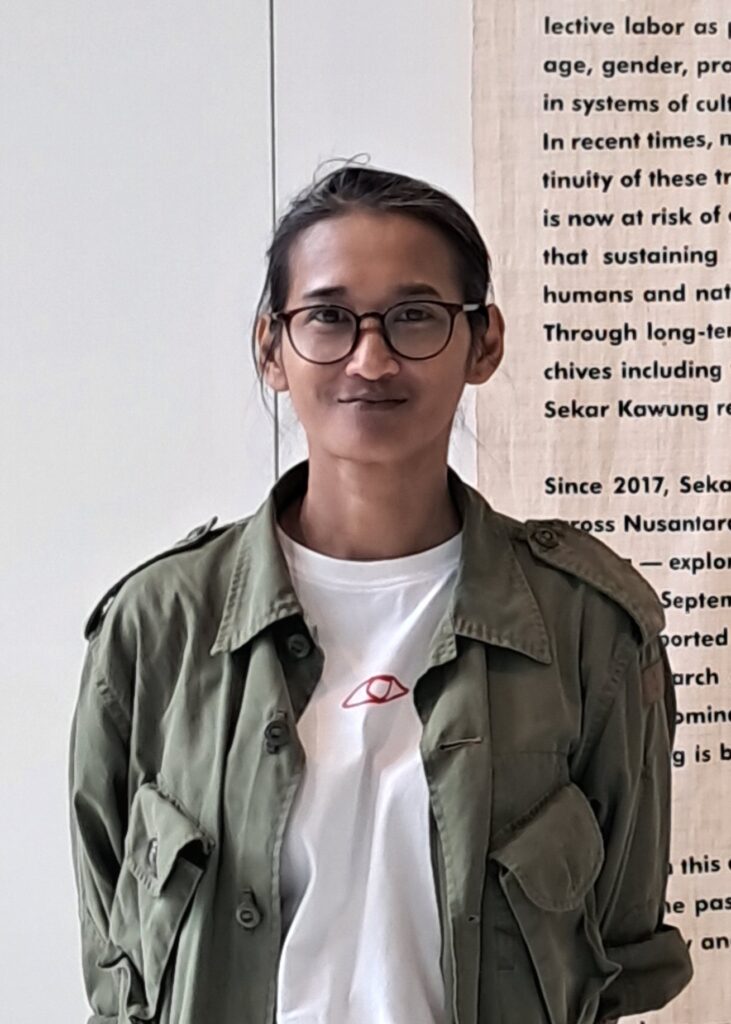
Photo Credits: Adriana Andhini
Instagram: Karina Roosvita Indirasari
https://www.instagram.com/karinaroosvita?igsh=a2I1azJ2enNyZ2V5
@inkubatorinisiatif

Dieser Vortrag von Karina Roosvita wird organisiert vom Elise Richter PEEK Projekt
„Datenkolonialismus in Indonesien. Die Strategien indonesischer Künstler*innen im digitalen Kolonialismus“
und beschäftigt sich mit der ausgelöschten Vergangenheit jener indonesischer Frauen, die bei der Afrika Asien Konferenz 1955 eine tragende Rolle gespielt hatten.
ENGLISH
The Complexities of Clothing in Gendered Practices
A reflection on the intersections of art and activism
by Karina Roosvita
This presentation examines how clothing works as a structure of power within historical, cultural, and transnational gender politics. Since 2019, Karina have engaged with clothing across different contexts, from everyday use to diplomatic staging and national traditions, to understand how clothing mediates cultural and political identity.
It began with Karina’s research on the Sarong (2019–2020), which revealed that the Sarong, although almost identical to a skirt, is legitimized as masculine clothing through religious authority, patriarchal norms and social consensus. Through The Tea Party Project (2022) her next research examines the erasure of women in Asia Africa Conference 1955 history – while women traditional clothing continued to function as cultural diplomation. Karina expands the research through her residency in Graz (2024), where she learned that traditional clothing in the Austria has become a signifier of conservatism and national trauma, in contrast to the Global South, where kebaya and sarong are tied to class struggle and egalitarian politics.
These trajectories developed into „The Shadow of Being“ (2025), an embroidery and light installation works that highlights women whose identities revealed through „The Tea Party Project“. Drawing from photo archive, Javanese Wayang philosophy, and Naoko Shimazu’s concept of staging diplomacy, the work brings forward those erased history.
DEUTSCH:
Über die Komplexität von Bekleidung in Gender Praktiken:
Intersektionale Reflektionen zu Kunst und Aktivismus
Diese Präsentation untersucht, wie Kleidung innerhalb historischer, kultureller und transnationaler Gender Politik als Machtstruktur funktioniert. Seit 2019 arbeitet Karina mit Kleidung in unterschiedlichen Kontexten, im Alltag bis zur diplomatischen Inszenierung sowie nationalistisch geprägten Traditionen, und versucht zu verstehen, wie kulturelle und politische Identifikationen über Kleidung mediiert werden.
Karinas erstes Research Projekt über den Sarong (2019-2020) zeigte, dass der Sarong, der einem Rock ähnelt, sich als maskulin konnotiertes Kleidungsstück sowie über religiöse Autorität als auch über patriarchale Normen und soziale Konventionen legitimiert. Das darauf folgende Forschungsprojekt widmete sich, anhand des „The Tea Party Project“ (2022), der Auslöschung von Frauen, die ein tragenden Rolle während der Asia Africa Conference 1955 spielten. Karina setzte ihre Untersuchungen während ihrer Artist Residency in Graz (2024) fort, wo sie feststellte, dass traditionelle Kleidung in Österreich mit Konservatismus und nationalistischem Trauma assoziert wird, ganz im Gegensatz zum Globalen Süden, wo Kebaya und Sarong mit Klassenkampf und dem Ziel einer egalitären Gesellschaft in Verbindung gebracht werden. Diese Erfahrung entwickelte sich zum Konzept für The Shadow of Being (2025), eine Stick- und Licht Installation, in der Frauen im Mittelpunkt stehen, die im The Tea Party Project entdeckt worden waren. Die ausradierte Geschichte wird anhand eines Foto Archivs, Javanischer Wayang Philosophie und Naoko Shimazus Konzept der inszenierten Diplomatie rekonstruiert.
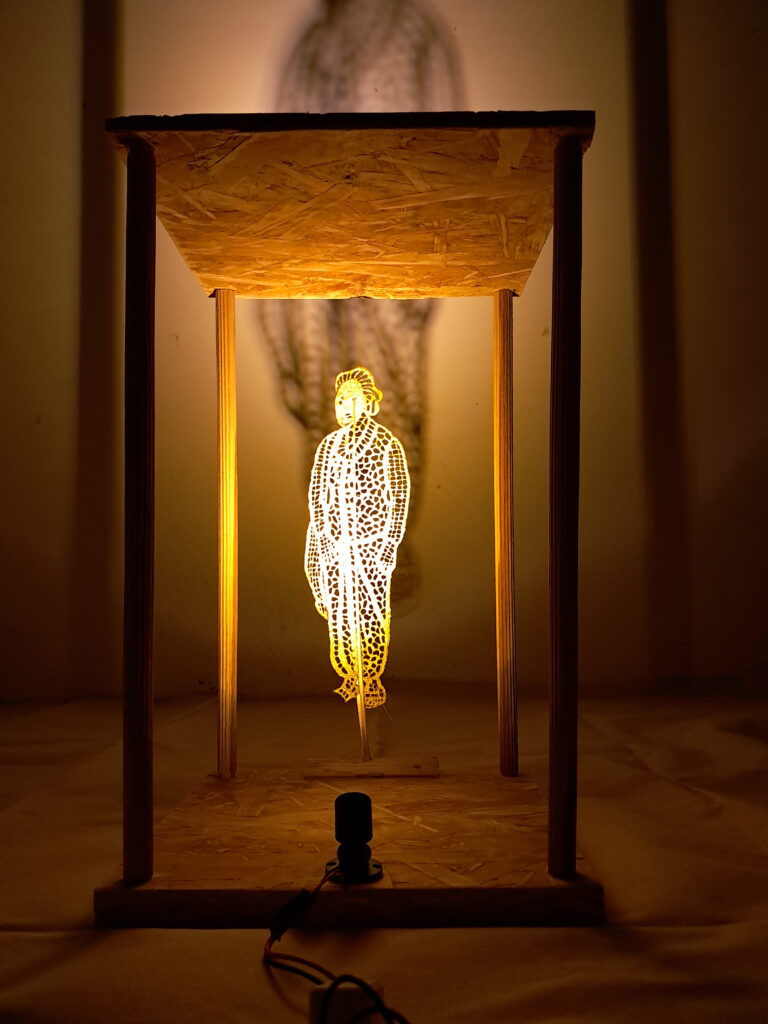
A small wooden light sculpture stands on the floor. It consists of a box-like wooden frame with four vertical rods and a flat top. Inside it stands a cut-out embroidered figure of a woman, glowing warmly from a light at the base. The light casts a much larger, softer shadow of the figure onto the wall behind it. The dim surroundings make the glowing embroidery and its shadow the main focus of the image.
Image Credits: Karina Roosvita, 2025
Karina’s exhibition and travel have been made possible with the kind support of Afro Asiatisches Institut Graz.
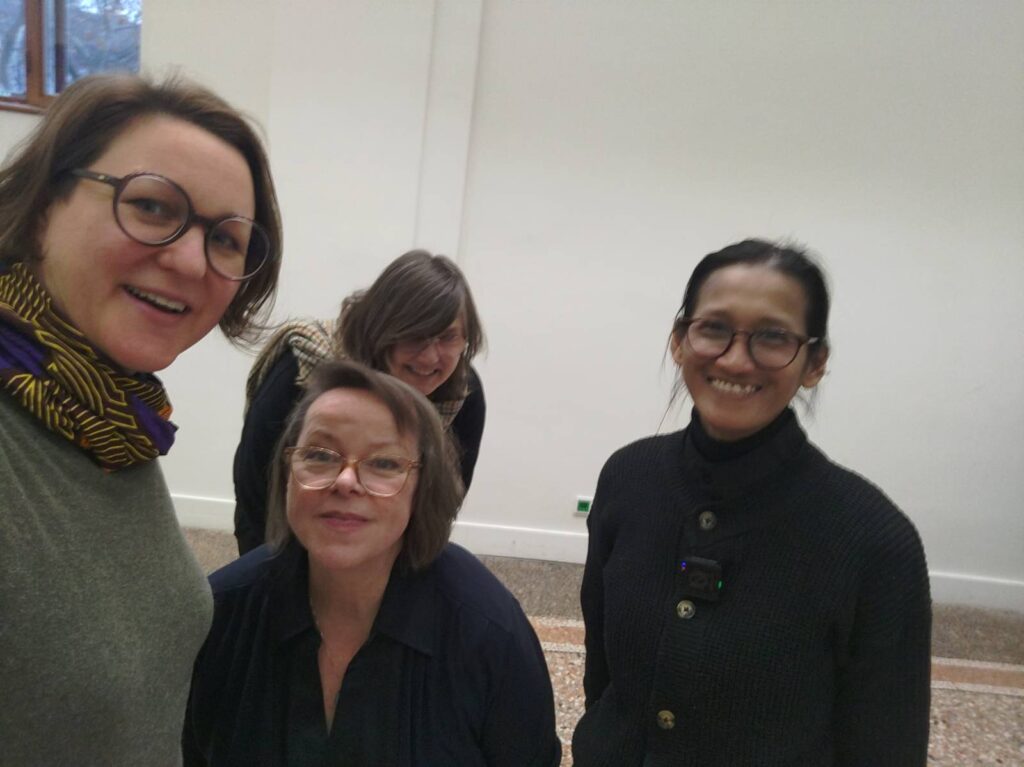
18th of December 2025, lecture in Conference room of Academy of Fine Arts Vienna